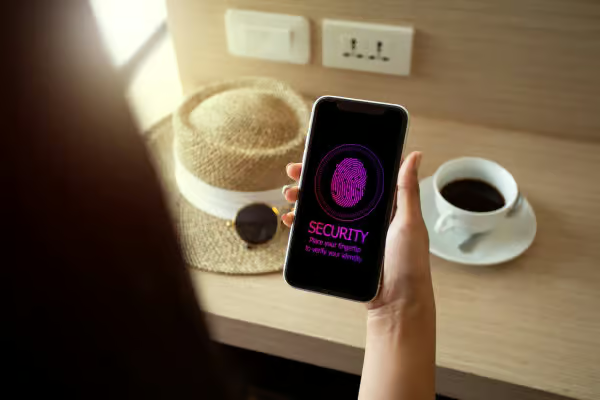
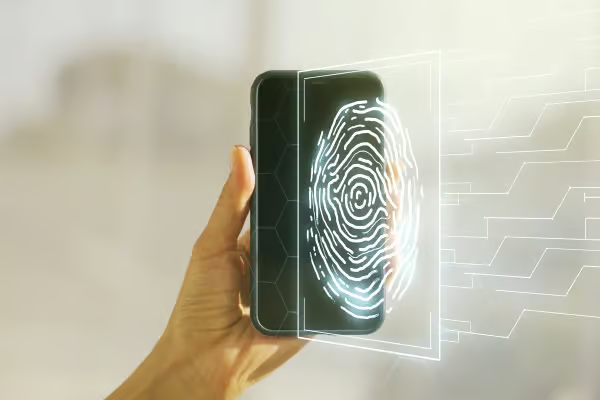
The world we live in is constantly evolving, and technological advancements continue to push the boundaries of what we thought was possible. One area that has seen significant growth is identification and security, and mobile fingerprinting is taking center stage as the future of identification.
With the rise of smartphones and mobile devices, it is only fitting that we start to see biometric technologies integrated into our everyday lives. Mobile fingerprinting is a promising development that has the potential to revolutionize the way we identify ourselves for everything from accessing our bank accounts to boarding a plane.
In this article, we’ll explore the exciting advancements in mobile fingerprinting technology and how it’s shaping the future of identification. So sit back, relax, and prepare to have your mind blown by the possibilities of mobile fingerprinting.
What Is Mobile Fingerprinting?
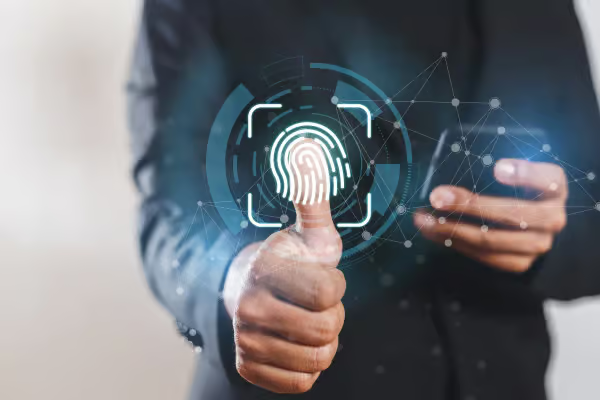
Mobile fingerprinting is the use of biometric technologies to verify a person’s identity using their fingerprints. It’s a process that’s been around for a while, but it’s only in recent years that it’s started to gain traction in the mainstream.
The technology is designed to be used on mobile devices, such as smartphones and tablets, and is often used as a replacement for traditional passwords and PINs. Instead of typing in a code, users simply place their finger on the device’s fingerprint scanner, and the technology does the rest.
Mobile fingerprinting has the potential to be a game-changer in the world of identification, as it offers a level of security that traditional methods can’t match. This is because fingerprints are unique to each individual, and someone can’t replicate them. As a result, mobile fingerprinting is seen as a more secure way to authenticate a person’s identity.
How Does Mobile Fingerprinting Work?
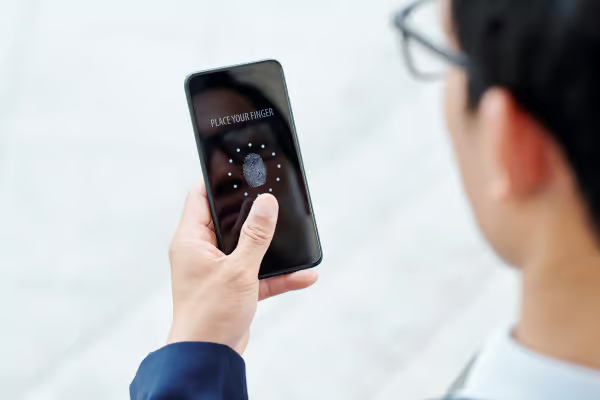
Mobile fingerprinting works by using a small sensor that’s embedded in the device’s screen or home button. When a user places their finger on the sensor, it captures an image of their fingerprint and compares it to the one that’s stored on file. If the two prints match, the user is granted access to the device or the app they’re trying to use.
The process is relatively quick and seamless, and it’s designed to be as user-friendly as possible. Most devices that use mobile fingerprinting will prompt the user to set up their fingerprint as part of the initial setup process, and from there, it’s simply a matter of placing their finger on the sensor to unlock the device.
The History Of Fingerprint Identification
The use of fingerprints for identification purposes dates back to ancient Babylon, where fingerprints were used on clay tablets for business transactions. However, it wasn’t until the late 19th century that fingerprints were first used as a method of identification in criminal investigations.
Over the years, fingerprint identification has become an essential tool in law enforcement, and it’s now used in countries all over the world. However, it’s only in recent years that the technology has started to be used in other areas, such as mobile authentication.
The police station, the airport, and now your phone – fingerprint identification is quickly becoming a part of our everyday lives.
Other methods involve children fingerprinted for school attendance, and for safety initiatives in one’s house.
The Benefits Of Mobile Fingerprinting
There are several benefits to using mobile fingerprinting as a method of authentication.

Track User Behavior
Mobile fingerprinting also provides companies with the ability to track user behavior across various online platforms and devices.
This helps them build detailed profiles of their customers and understand what content is likely to be effective in marketing campaigns. It also makes it easier for companies to detect fraud and protect their brand from malicious activities.
Office fingerprinting requires that users register their fingerprints before they can access the premises. This helps to reduce identity theft and unauthorized access, as it ensures that only authorized personnel are allowed in the building.
Compliance With Relevant Regulations
In addition, mobile fingerprinting allows businesses to ensure compliance with relevant regulations such as GDPR and COPPA (Children’s Online Privacy Protection Act).
By gathering data about what language preference has been set on a device, what country or region it is located in, what type of operating system it runs on, etc., companies can ensure they are only sending personalized messages and ads that comply with laws and regulations.

User Authentication And Security
Mobile fingerprinting is essential for user authentication and security purposes. By comparing what data already exists in a company’s database with what is collected from the device, businesses can determine if the person using the device is who they claim to be and protect their accounts from unauthorized access.
Browser cookies, geolocation data, and other technologies can also be used to detect fraud. For large groups, network-level authentication can be used to confirm the identity of an individual.

Mobile Fingerprinting Vs Traditional Identification Methods
Mobile fingerprinting is often compared to traditional identification methods, such as passwords and PINs. While both methods have their pros and cons, mobile fingerprinting is generally considered to be a more secure and convenient way to authenticate a person’s identity as compared to ink fingerprinting.
Another advantage of mobile fingerprinting is that it’s faster and more convenient than traditional methods. Instead of having to type in a code every time you want to access an app or service, you can simply place your finger on the device’s sensor.
Mobile Fingerprinting In Everyday Life
Mobile fingerprinting is already being used in a variety of industries, from banking to healthcare.
Government employees are also increasingly using mobile fingerprinting for access to secure areas.
In the healthcare industry, mobile fingerprinting is used to verify a patient’s identity before they receive treatment.